Showing posts with label Greats. Show all posts

11.6.10

Kartoshka All Stars...


Lev Yashin- Soviet Union (1954-1970) there have been few challengers to his status as the greatest of all goalkeepers, Yashin was consistent- brave, an athlete and a great stopper.

Cafu- Brazil (1990–2006)** hard to beat and very dangerous going forward.
Franz Beckenbauer- West Germany (1965–1977)* (captain)- The Kaiser was solid in defence and his accomplishments as a midfielder led to him practically inventing the role of sweeper. Would win the ball and then set off on marauding runs- box to box.
Marcel Desailly - France (1993–2004)* strong, solid and stylish.
Paolo Maldini - Italy (1988–2002) the greatest of all left backs, period.

Didi- Brazil (1952–1962)** defined the modern midfielder as we know it- lethal from free kicks, combative, incisive passer.
Socrates- Brazil
(1979–1986) superb ball player and an ideal fulcrum.
Zinadine Zidane - France (1994–2006)* the paragon of modern midfield play, tough, skillful and a deadly finisher.

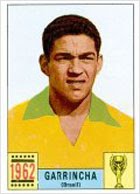
Mané Garrincha- Brazil (1955-1966)**- Mané wasn't always glued to the right touchline- he often cut into the inside right channel and could shoot from range or deliver very telling balls into the danger area.He could head the ball also.
Johann Cruyff- The Netherlands (1966–1978) could have picked him in a number of positions, his finishing alone justifies his place at the centre of a three man attack.
Pelé- Brazil- (1957–1971)*** his range of talents and prolific scoring record cannot be overlooked.

I'm shamelessly nostalgic , so I'll take any criticisms of the 'retro' look of my 11 with a pinch of salt. At first I was concerned that it was a bit right sided (imagine having Cafu overlapping Garrincha!). There is also the argument that Garrincha wouldn't do much tracking back. Cruyff was also accused of sometimes neglecting the defensive aspect of total football. But the midfield has a solid look to it! and the back four is a mobile and formidable unit. If Beckenbauer moved up into midfield with the ball he was usually moving forward with intent, so any gap left at the back was academic. As I've said before- in football there is no right or wrong- only opinion- it's just a bit of fun.
Enjoy the World Cup!

7.6.10

Dream Teams...

I'm breaking my resolution to avoid posts on football during World Cup month: I'll excuse myself by pointing out there are still 4 days to go...>One of the most futile, frustrating and yet inexhaustibly enjoyable pursuits open to the football lover is the selection of 'all time greatest' teams. In football there can be no right or wrong, only opinion, and it is impossible to select such teams given the changes that the game has undergone. Modern players are fitter, the ball is lighter, pitches better, they don't have to put up with the rough treatment that wash dished out in the past. Modern defensive play is better organised and I believe the general level of individual skill is greater than ever.
I'm not going to commit myself to naming my all time 11 yet, but let's look at some others.
In 1994 FIFA selected this team, which lined up in a 4-3-3 formation:


Lev Yashin- Soviet Union (1954-1970)
Djalma Santos- Brazil (1952–1968)**
Franz Beckenbauer- West Germany (1965–1977)*
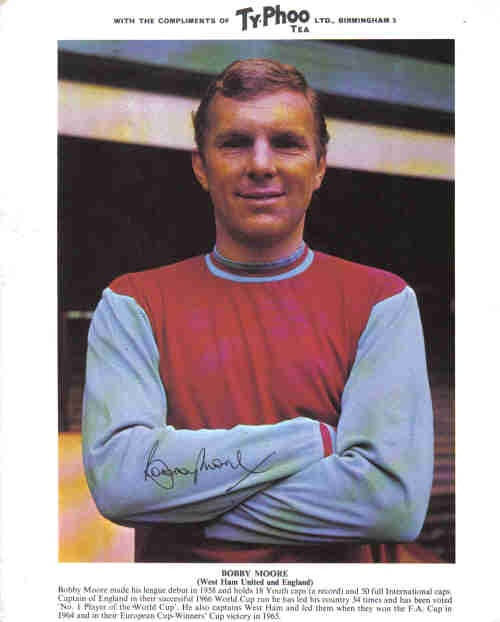
Bobby Moore- England(1962–1973)*
Paul Breitner - West Germany (1971–1982)*
Johann Cruyff- The Netherlands (1966–1978)
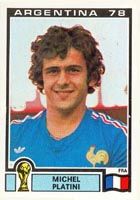
Michel Platini - France (1976–1987)

Bobby Charlton - England (1958–1970)*
Mané Garrincha- Brazil (1955-1966)**
Ferenc Puskas - Hungary & Spain (1945–1956/1962)
Pelé- Brazil- (1957–1971)***

At the FIFA World Cup in France 1998 Mastercard got 250 journalists to select their Team of the Century.Again the formation was 4-3-3:


Yashin
Carlos Alberto Torres- Brazil (1964-1977) *
Beckenbauer
Moore
Nilton Santos- Brazil (1949-1963) **

Cruyff
Alfredo di Stefano - Argentina, Columbia, Spain (1947–1949/1949–1954/1954–1962)
Platini
Mané Garrincha
Diego Maradona- Argentina (1977–1994)*
Pelé

In the build up to the 2002 World Cup FIFAworldcup.com selected the following on the basis of online voting by fans:


Yashin
Paolo Maldini - Italy (1988–2002)
Beckenbauer
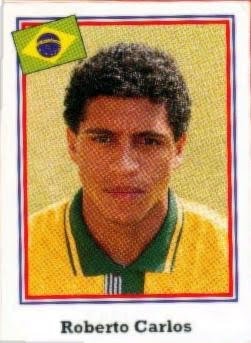
Roberto Carlos - Brazil (1992–2006) *
Roberto Baggio - Italy (1988–2004)
Zinadine Zidane - France (1994–2006)*
Platini
Maradona
Romario - Brazil (1987–2005)*

Cruyff
Pelé

Unlike the previous selections, which were quite logical and balanced, this is a crazy set up that would never work in reality. 3-4-3
3 at the back- Maldini on the right? Roberto Carlos
was strong going forward but couldn't defend, Beckenbauer buried in the middle of a 3 man defence?
4 number 10's in midfield-
11 great players, but not really a team.
Anyway- Joao Kartoshka will reveal his all time 11 in the near future...

8.11.09

Fekete Párduc...

In the future we will look at the Hungarian Golden Squad of the 1950’s in greater depth (inevitably of course in the context of the great Puskas).
Against a backdrop of political and social unrest Hungary (under coach Gusztav Sebes) produced a phenomenally successful international football team. Introducing a more fluid approach to play they were undefeated from June 1950 to July 1954, 32 games in which they scored 144 goals (conceding 33).
Grosics Gyula played 86 internationals in a career punctuated by enforced sabbaticals- for example 15 months when he was investigated on charges of treason. He was frequently at odds with the countries rulers. During the war he had, after all, been a volunteer in an Armoured Division of the SS. In 1949 he was apprehended attempting whilst to leave the country.
Despite these problems Grosics was a participant at three consecutive World Cups, 1954, 1958 and 1962, and won a Gold medal at the 1952 Olympic Games.
Nicknamed Fekete Párduc (The Black Panther) Grosics developed the role of the ‘keeper as sweeper. His quick distribution also helped launch rapid counterattacks, and he recalls Puskas continually demanding swifter distribution, he and Hidegkuti dropping back to collect the ball from throws. Rolling the ball out… was one of the things I developed. It was much more accurate- and quicker- than just hoofing it upfield.
Graduating from lesser lights such as Dorogi Bányász, MATEOSZ and Teherfuvar, in 1950 Grosics joined Honvéd (the Army team to which top players were seconded via nominal conscription) and later Tatabányai Bányász ( a provincial miner’s team , to which he was transferred for incurring the displeasure of the authorities). He retired in 1962.
In 2008, at the age of 82, Grosics was given the opportunity to fulfill a long held ambition to appear for his favourite club, Ferencváros. Grosics kicked off in a friendly against Sheffield United and stood in goal for a few minutes before being substituted.

13.10.09

1966 Was a Great Year for English Football…


I didn't study; I live… Eric Cantona

No sardines, no trawler...

Anybody who was fortunate enough to have watched top flight English football between 1992 and 1997 will have seen a genius at work. That they might not like to admit it could be down to two things-the jealous dislike of the club for which this genius was displayed and the nature of the man himself. It would certainly not be down to his attributes as a player, but here was an obvious chanel for the English distrust of otherness, of cleverness. The spirit of Rimbaud, of Camus' Mersault, of Raoul Vaneigem. Cantona, with imperious confidence in his convictions- is it, after all, only a game?; The British public would rather their Gazzas.

During his six seasons in England Cantona collected 5 league champions medals and two FA cup winners medals- in 1992 he took Leeds United to their first championship for 18yrs, in 1993 he was instrumental in Manchester United securing top spot for the first time in 26 years…
Despite a widely held belief to the contrary Cantona did enjoy some success at international level- he represented France 45 times and scored 20 goals before he pissed the authorities off irredeemably.

8.10.09

Goalkeeper...

So, when considering the footballing greats, why not choose a goalkeeper with the knack of scoring goals?
There is a widely held belief that all goalkeepers are mad. There is also a theory that they are, at heart, frustrated outfield players.
Yashin would come out of the box to sweep up behind his defenders, Schmeichel would go up for corners, Higuita would join his outfield colleagues, sometimes with disastrous consequences, Ramón ‘El Loco’ Quiroga was equally rash in his excursions from the penalty area, but Chilavert…

As well as being solid between the sticks, Paraguayan José Luis Félix Chilavert González also had a reputation for banging them in. he was a free kick specialist as well as a regular penalty taker. Consequently he has a record 62 career goals, a goal every eight games.
Chilavert was also known for his eccentricity and at times fiery temper; during a qualifying game for the 2002 World Cup, he spat on Brazil's Roberto Carlos. He also angered the Paraguayan government by refusing to take part in the Copa America of 1999, as he claimed the funding would be better used for education.
Chilavert played most of his football in Argentina with Vélez Sársfield, helping them win the Argentine championship four times as well as the Copa Libertadores and the Intercontinental Cup, both in 1994
He was voted World Goalkeeper of the Year by the IFFHS in 1995, 1997, and 1998.
In 1996 he was named South American player of the year- the only goalkeeper to win this accolade.


FIFA named Chilavert on the France '98 tournament All Star Squad.

1999, he became the first goalkeeper to score a hat-trick in the history of football, while playing for Vélez against Ferro Carril Oeste, scoring all three goals through penalties. He also scored a memorable free-kick from behind the half-way line against River Plate.
He has 74 international caps for Paraguay and an impressive 8 international goals

26.9.09

Гунди


During the 'Cold War' era the interest in footballers from 'behind the Iron Curtain' was limited. Yashin of The Soviet Union was internationally renowned, the Hungarians of the early 1950's ( some of whom , notably Puskas, fled the uprising and moved to the west) were admired.
Following impressive displays against Benfica in the 1966 European Cup, Georgi Asparuhov (1943 – 1971) of Bulgaria actually attracted attempts from 'western' clubs (Benfica included) to sign him. It is understood that these overtures were scotched by the Bulgarian Government.
Known as Gundi, Asparuhov played for Levski Sofia from 1960 to 1961 and 1964 to 1971, and for Botev Plovdiv from 1961 to 1963. He played 245 matches and scored 150 goals in the Bulgarian first division. He represented Bulgaria 50 times (and at 3 World Cup Finals) scoring 19 goals. He was awarded The Order of Labour.
Asparuhov was killed in a car crash in June 1971, and his funeral brought crowds estimated at 500,000 to the streets of Sofia. The Levski stadium is now named in his honour.
For a study in finishing see the goal that he scored against England at Wembley in 1968- it's on You Tube.